The best portable power stations for a sump pump
A sump pump is a motor that starts hard and then runs in bursts: the starting surge decides which station can start it at all, and the weather decides how much energy it drinks. Sized on the harder end of every range.
Buy the EcoFlow DELTA 2 Max. It clears this plan's worst-case starting surge on the maker's own peak rating, it has a verified listing, and it takes expansion batteries if one day turns out not to be enough. The Jackery Explorer 2000 v2 holds much the same battery for less money, but its peak rating clears the surge in the best case only, which is a gamble on the one thing you are buying it to do. Take the Anker SOLIX F3800 if the storms where you live take the power out for days, because it holds nearly twice the usable battery and accepts the most solar of the three.
The Amazon links on this page are affiliate links: if you buy through one we may earn a commission, at no extra cost to you. It does not change which units are picked. How that works.
| Model | Usable | Output | Typical day | Per usable kWh | Price | |
|---|---|---|---|---|---|---|
| Our pick | 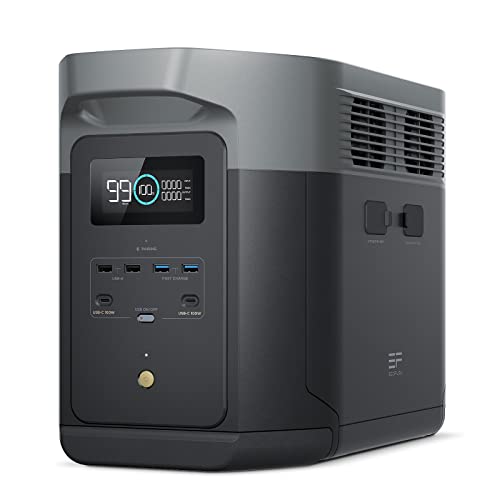 EcoFlow DELTA 2 Max EcoFlow DELTA 2 Max | 1,741 Wh | 2,400 W | +2 extra batteries | $591 | $1,029 at Amazon |
| Less money, thinner margin | 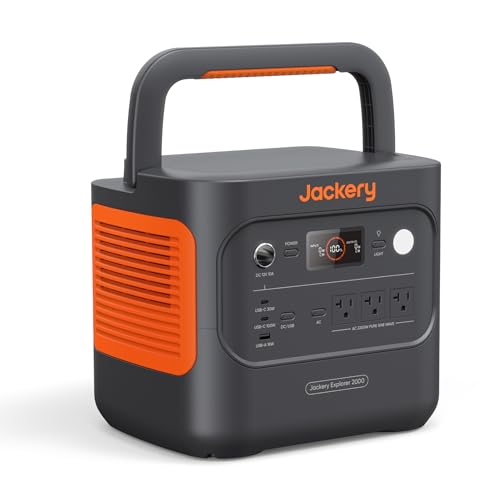 Jackery Explorer 2000 v2 Jackery Explorer 2000 v2 | 1,736 Wh | 2,200 W | needs a recharge | $518 | $899 at Amazon |
| For a long storm | 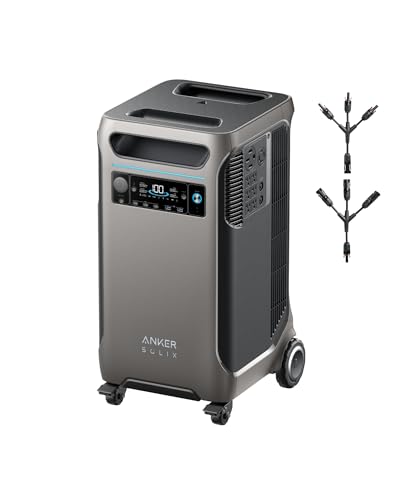 Anker SOLIX F3800 Anker SOLIX F3800 | 3,264 Wh | 6,000 W | +1 extra battery | $607 | $1,980 at Amazon |
Who this is for
You have a pump in a pit that fills when it rains hard, and you would rather not learn what happens when the same storm takes the power out. You want something that runs indoors, starts the pump on its own with nobody standing there, and keeps the router and a few lights going while it does.
How much battery you need
Two numbers come out of this plan and only one of them decides the pick. Keeping everything running takes 730 to 1,620 watts, which is the easy part. Starting the pump takes 2,030 to 4,620 watts for a split second, and a station whose peak rating falls short of that does not run the pump weakly, it does not start it at all.
Adjust this plan to your house. Change the hours or the loads and the picks are re-scored here, with the same planner and the same maker figures.
Where the energy goes, load by load
| Load | Hours | Running watts | Duty cycle | Energy | Share of worst case |
|---|---|---|---|---|---|
| Sump pump | 24 | 700–1,500 | 5–35% | 840–12,600 Wh | 90% |
| Wi-Fi router and modem | 24 | 15–40 | 100% | 360–960 Wh | 7% |
| A few LED lights | 8 | 15–80 | 25–75% | 30–480 Wh | 3% |
Energy = running watts × duty cycle × hours, at each end of the range. The right-hand end of every row is what the plan is sized on.
A sump pump, Wi-Fi and a few LED lights for 24 hours, run against all 73 units we track: 37 clear at least the best case, 32 do not, and 4 could not be judged (a missing maker figure or an unresolved recall identity). Every figure is from the maker’s own page or manual; nothing here was tested by us. The method.
Our pickEcoFlow DELTA 2 Max
The one most people should buy
$1,029 at Amazon, October 3, 20262,048 Wh (1,741 usable)2,400 W continuous4,800 W peak51 lb
The EcoFlow DELTA 2 Max clears the worst-case starting surge on EcoFlow's own peak rating, which is the number this plan cannot compromise on, and it is still a one-person carry rather than a fixture. It covers the quiet end of a 24-hour outage and not the storm end, which is true of everything portable.
Our rule: the cheapest unit that covers a typical day of this plan (4,000 Wh), here with 2 extra batteries ($2,827). The same-size EcoFlow DELTA 3 Max (2048Wh) is $150 cheaper but takes no extra battery, and one charge does not cover this plan.
On a typical day this plan needs about 4,000 Wh: one charge plus 2 extra batteries. A hard-working sump pump may need up to about 14,000 Wh.
Price as of October 3, 2026; the listing we verified as the bare unit.
A sump pump, Wi-Fi and a few LED lights for 24 hours:
- Energyonly in the best case
- Running loadyes, even in the worst case
- Starting surgeSump pump: starts it
What you give up: Energy. It holds the least battery of the three and it is the first to empty on exactly the night you bought it for.
Owner reports and tester figures are on the model page.
Figures from us.ecoflow.com, captured August 12, 2026; recall screen: no published recall names this exact model (screened 2026-10-01), but a similarly named product was recalled; the dossier names it (how we screen, CPSC).
Less money, thinner marginJackery Explorer 2000 v2
Less money, thinner margin
$899 at Amazon, October 3, 20262,042 Wh (1,736 usable)2,200 W continuous4,400 W peak39 lb
The Jackery Explorer 2000 v2 holds much the same battery as our pick for less money and is the lightest of the three, but its peak rating clears this pump's starting surge in the best case only. That is worth saying without decoration: if your pump sits at the hard end of the range, Jackery's own peak figure does not cover the moment it starts.
Price as of October 3, 2026; the listing we verified as the bare unit.
A sump pump, Wi-Fi and a few LED lights for 24 hours:
- Energyonly in the best case
- Running loadyes, even in the worst case
- Starting surgeSump pump: may not start a hard-starting one
What you give up: Margin, everywhere. The surge clears the best case only, there is no expansion port, so the ceiling is fixed the day you buy it, and the solar input is the lowest here, which makes a multi-day refill slow.
Owner reports and tester figures are on the model page.
Figures from faq.jackery.com, captured August 12, 2026; recall screen: no published recall names this exact model (screened 2026-10-01) (how we screen, CPSC).
For a long stormAnker SOLIX F3800
For a long storm
$1,980 at Amazon, October 3, 20263,840 Wh (3,264 usable)6,000 W continuous9,000 W peak132 lb
The Anker SOLIX F3800 clears the worst-case surge with the most room to spare and holds nearly twice the usable battery of either smaller pick, which buys hours of hard cycling rather than a different verdict: it still covers the quiet end of a 24-hour outage and not the storm end. Where it pulls away is past that, with the largest solar input here and room for six expansion batteries.
Price as of October 3, 2026; the listing we verified as the bare unit.
A sump pump, Wi-Fi and a few LED lights for 24 hours:
- Energyonly in the best case
- Running loadyes, even in the worst case
- Starting surgeSump pump: starts it
What you give up: Weight and money. It costs about twice what our pick does and it becomes a fixture wherever you park it, so if your pit is an ordinary one, most of what you are paying to move never gets used.
Owner reports and tester figures are on the model page.
Figures from ankersolix.com, captured August 12, 2026; recall screen: no published recall names this exact model (screened 2026-10-01) (how we screen, CPSC).
Day two and three
Three days (72 hours) of the same loads needs 3,690 to 42,120 watt-hours. None of the three picks covers even the bottom of that on a single charge, and neither does anything else we track, so past the first day the question stops being which box and becomes how you put energy back into it.
Hooking it up safely
The plug-in path is the plan on this page. The station sits indoors, the fridge, router and lamps plug into its outlets, and nothing touches the house wiring.
Wired loads are a different job. A well pump, a furnace or a whole circuit needs a transfer switch or a power inlet installed by a licensed electrician (which switch fits which station or generator). Never feed a station or a generator into a wall outlet: it backfeeds the line and can kill the crew restoring your power. The safety rules and pass-through and output quality.
Buying it right
A search for these models returns bundles, sibling models and the same unit under two prices. We link only a listing whose own title states the bare unit with its exact battery and output. Match the model number on the label to this page. How we check a listing.
- EcoFlow DELTA 2 Max: we link the bare unit, checked October 3, 2026. We turned down 9 other listings (bundles, sibling models, repeats); see which and why.
- Jackery Explorer 2000 v2: we link the bare unit, checked October 3, 2026. We turned down 9 other listings (bundles, sibling models, repeats); see which and why.
- Anker SOLIX F3800: we link the bare unit, checked October 3, 2026. We turned down 9 other listings (bundles, sibling models, repeats); see which and why.
What this page can’t promise
This page sizes a battery against a pump. It does not know how fast water comes into your pit, which is the number that decides everything here, and it cannot promise you a dry basement. It is also worth saying plainly that this is the one appliance you back up while standing in the place that floods: keep the station up off the floor and well away from the pit, and do not wade anywhere to reach it.
Nothing here was tested by us. The figures are the makers' own, read off their pages and manuals and cited under each pick, and where a marketing page and a printed manual disagree we say so rather than take the better number. What owners report comes from public threads and hands-on review sites and is labelled as such.
The competition
Every unit we track, run against the same plan.
Every unit on Amazon that clears at least the best case (25)
| Model | Battery | Peak | Per usable kWh | Amazon price | Verdict |
|---|---|---|---|---|---|
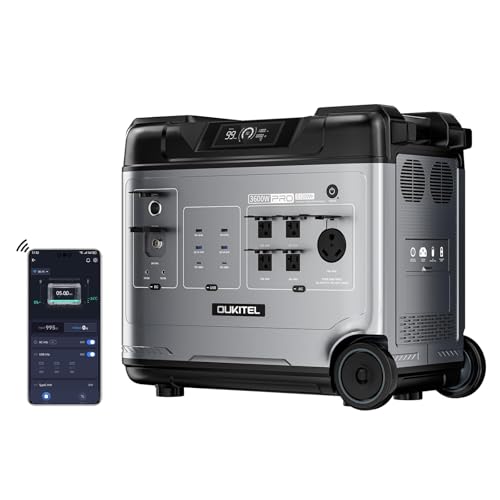 OUKITEL P5000 Pro OUKITEL P5000 Pro | 5,120Wh | not listed by the maker | $344 | $1,499 | Best case only |
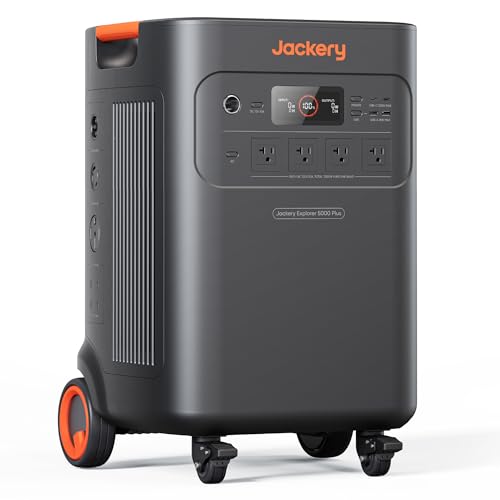 Jackery Explorer 5000 Plus Jackery Explorer 5000 Plus | 5,040Wh | 14,400W | $735 | $3,149 | Best case only |
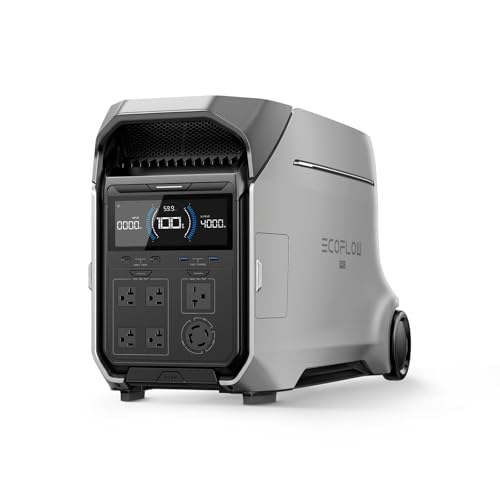 EcoFlow DELTA Pro 3 EcoFlow DELTA Pro 3 | 4,096Wh | 8,000W | $804 | $2,799 | Best case only |
| Anker SOLIX F3800 | 3,840Wh | 9,000W | $607 | $1,980 | Best case only |
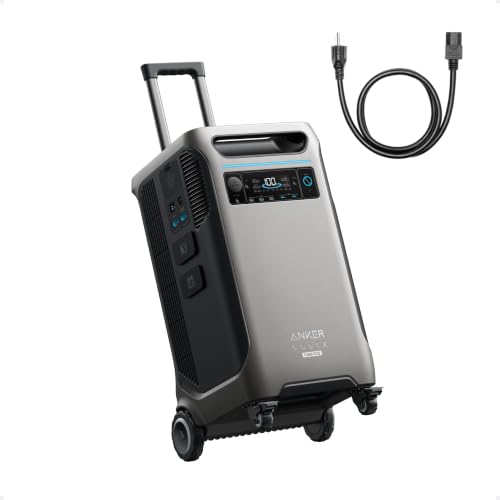 Anker SOLIX F3800 Plus Anker SOLIX F3800 Plus | 3,840Wh | 9,000W | $735 | $2,400 | Best case only |
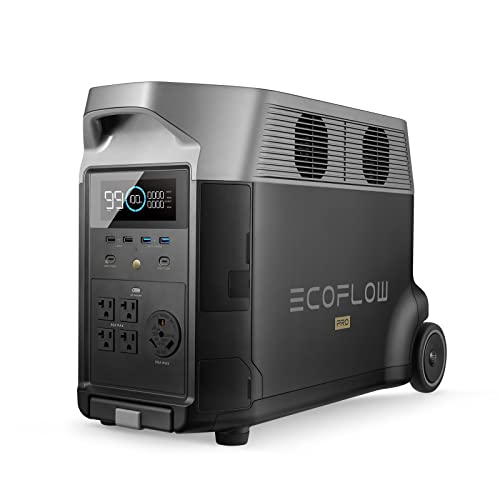 EcoFlow DELTA Pro EcoFlow DELTA Pro | 3,600Wh | 7,200W | $621 | $1,899 | Best case only |
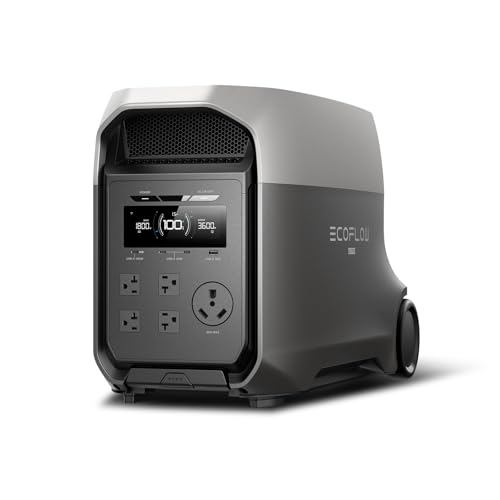 EcoFlow DELTA 3 Ultra (3072Wh) EcoFlow DELTA 3 Ultra (3072Wh) | 3,072Wh | 7,200W | $517 | $1,349 | Best case only |
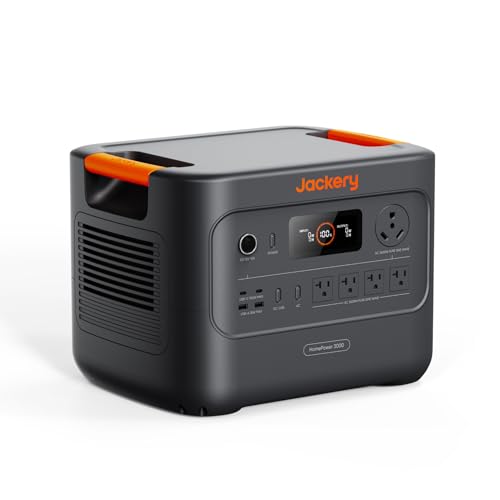 Jackery HomePower 3000 Jackery HomePower 3000 | 3,072Wh | 7,200W | $517 | $1,349 | Best case only |
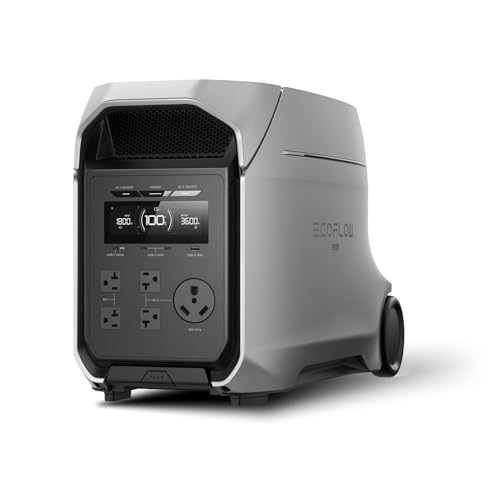 EcoFlow DELTA 3 Ultra Plus (3072Wh) EcoFlow DELTA 3 Ultra Plus (3072Wh) | 3,072Wh | 7,200W | $605 | $1,579 | Best case only |
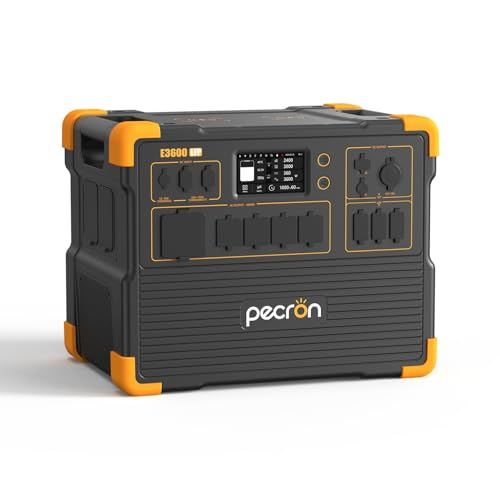 PECRON E3600LFP PECRON E3600LFP | 3,072Wh | 7,000W | $383 | $999 | Best case only |
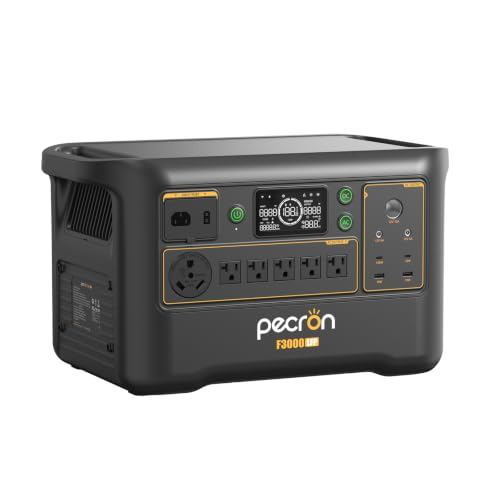 PECRON F3000LFP PECRON F3000LFP | 3,072Wh | 4,500W | $344 | $899 | Best case only |
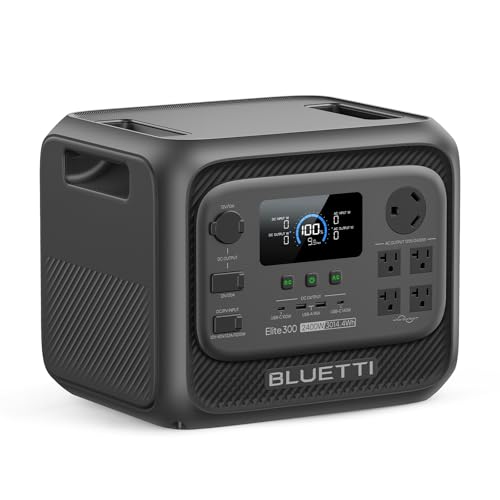 BLUETTI Elite 300 BLUETTI Elite 300 | 3,014Wh | not listed by the maker | $429 | $1,099 | Best case only |
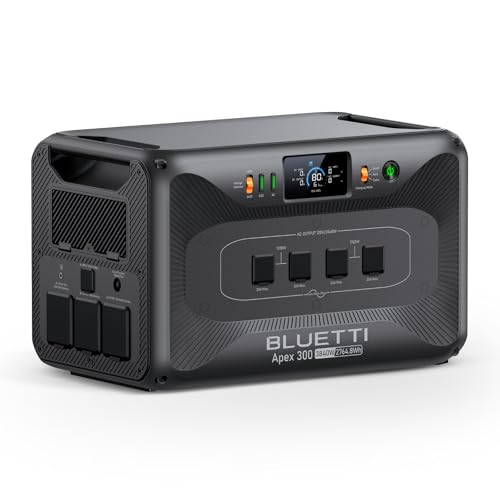 BLUETTI Apex 300 Home Battery Backup BLUETTI Apex 300 Home Battery Backup | 2,765Wh | 7,680W | $638 | $1,499 | Best case only |
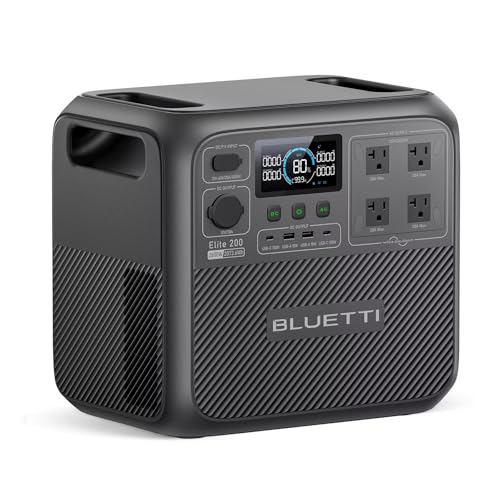 BLUETTI Elite 200 V2 BLUETTI Elite 200 V2 | 2,074Wh | not listed by the maker | $510 | $899 | Best case only |
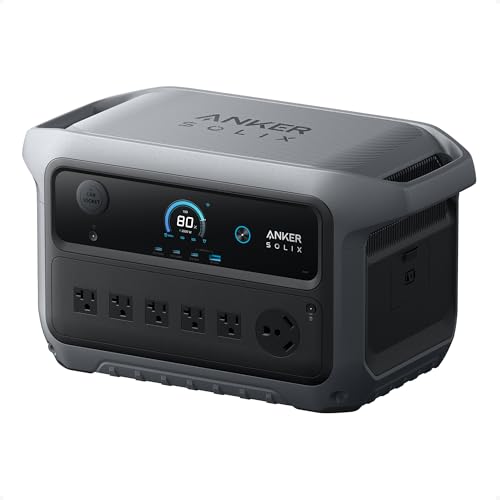 Anker SOLIX C2000 Gen 2 Anker SOLIX C2000 Gen 2 | 2,048Wh | 4,000W | $517 | $900 | Best case only |
| EcoFlow DELTA 2 Max | 2,048Wh | 4,800W | $591 | $1,029 | Best case only |
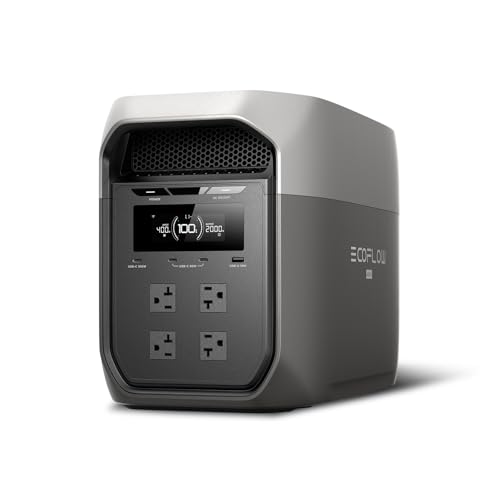 EcoFlow DELTA 3 Max (2048Wh) EcoFlow DELTA 3 Max (2048Wh) | 2,048Wh | 4,800W | $505 | $879 | Best case only |
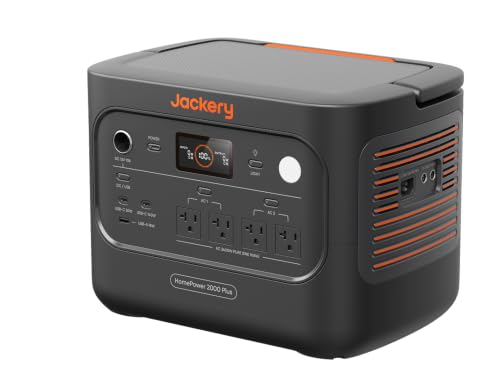 Jackery HomePower 2000 Plus v2 Jackery HomePower 2000 Plus v2 | 2,048Wh | not listed by the maker | $614 | $1,069 | Best case only |
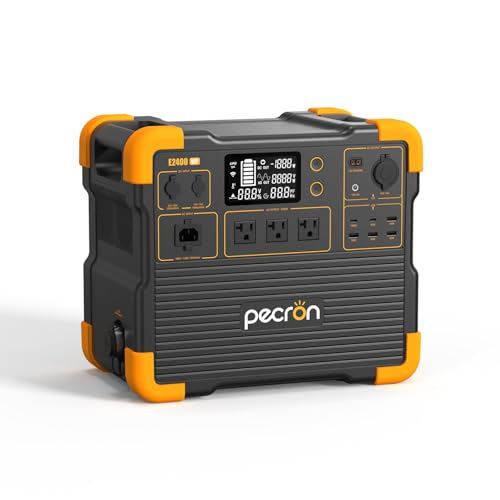 PECRON E2400LFP PECRON E2400LFP | 2,048Wh | 4,000W | $373 | $649 | Best case only |
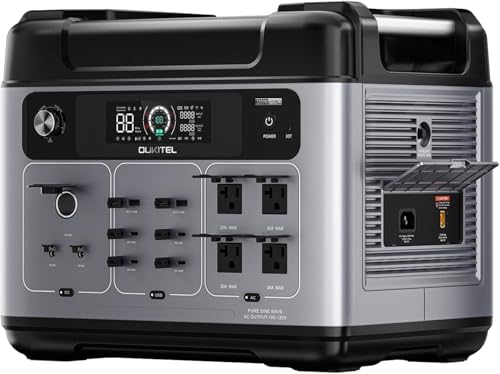 OUKITEL P2001 Plus OUKITEL P2001 Plus | 2,048Wh | 4,800W | $402 | $699 | Best case only |
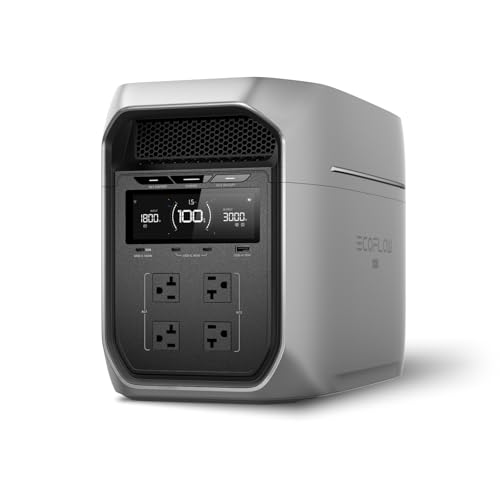 EcoFlow DELTA 3 Max Plus (2048Wh) EcoFlow DELTA 3 Max Plus (2048Wh) | 2,048Wh | 6,000W | $660 | $1,149 | Best case only |
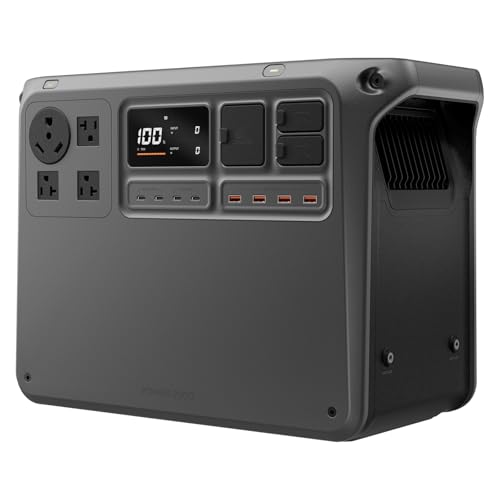 DJI Power 2000 DJI Power 2000 | 2,048Wh | not listed by the maker | $431 | $750 | Best case only |
| Jackery Explorer 2000 v2 | 2,042Wh | 4,400W | $518 | $899 | Best case only |
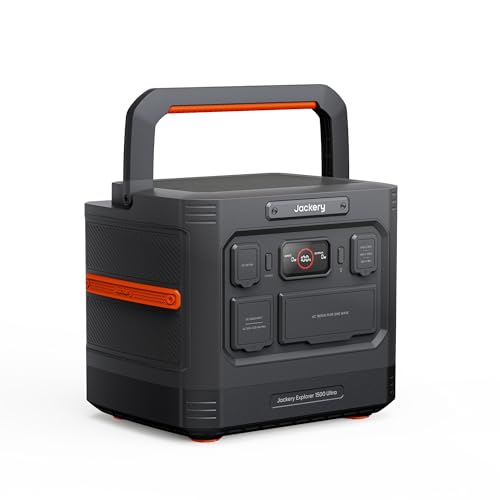 Jackery Explorer 1500 Ultra Jackery Explorer 1500 Ultra | 1,536Wh | 3,600W | $826 | $1,079 | Best case only |
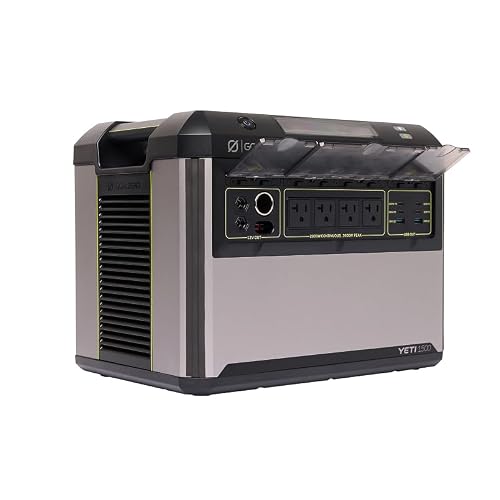 Goal Zero Yeti 1500 Goal Zero Yeti 1500 | 1,505Wh | 3,600W | $1,172 | $1,500 | Best case only |
12 more clear it but have no verified bare-unit Amazon listing; the planner lists them.
What will not work, and why (32)
- 14 hold too little energy for the plan
- 9 cannot carry the running load
- 9 are fuel generators, out of scope for an indoor plan
Every one, with the figure that fails, is in the planner when you enter this plan.
Questions people ask
Can a portable power station run a sump pump?
If its peak output clears your pump's starting surge, yes. This plan needs 2,030 to 4,620 watts for a split second, and a station rated below that will not run the pump weakly, it will fail to start the motor. Energy is the second question and a separate one: how long it lasts depends entirely on how much water is coming into the pit.
How long will a power station keep my sump pump going?
That depends on the water rather than the battery. Across 24 hours this plan needs anywhere from 1,230 to 14,040 watt-hours. In a dry spell the pump barely runs and any of these picks carries the day comfortably; in the storm that took the power out it can run a third of the time or more, and no portable battery we track covers that on one charge. Size for the storm.
Does the pump have to stay plugged into the station the whole time?
In practice, yes. A sump pump runs off a float switch with nobody watching, so it has to already be plugged into the station when the grid drops. All three picks pass grid power through to whatever is connected while they charge themselves, then take the load over in a few hundredths of a second when the supply fails, which is quicker than a motor can notice. Set it up that way in good weather.
Other plans we sized
- Home backup
- Camping and road trips
- CPAP
- Portable generators
- The home-backup class: DELTA Pro 3, SOLIX F3800, Explorer 5000 Plus and the rest (comparison)
- Refrigerator
- Furnace
- Well pump
- Anker SOLIX F3800 vs F3800 Plus: the real differences (comparison)
- Jackery Explorer 1000 v2 vs 1000 Plus: the expandable one or the cheaper one (comparison)
- Power station or generator: which do you actually need?
- How to connect a power station to your house
- Solar panels for a power station: how many, and how long
- Expansion batteries: what an extra battery for a power station actually does
EcoFlow DELTA 2 MaxOur pick
$1,029 at Amazon