The best backup power for a well pump
A well pump is the hardest start in an ordinary house, and it is wired in at 240 volts rather than plugged into anything. That is why this plan usually lands on a generator, and why every figure here is sized on the harder end of its range.
Buy the Westinghouse WGen9500DF: it clears the pump's worst-case starting surge with margin, puts out 240 volts, and is the only pick here with a retail listing whose model number matches the maker’s figures. The Anker SOLIX F3800 is the route for anyone who cannot run an engine, making split-phase 240 volts from a single box, though it covers a 24-hour outage at the efficient end only. Other generators clear the surge too, but none is sold on Amazon as the bare unit today, so we do not rank them.
The Amazon links on this page are affiliate links: if you buy through one we may earn a commission, at no extra cost to you. It does not change which units are picked. How that works.
| Model | Usable | Output | Typical day | Per usable kWh | Price | |
|---|---|---|---|---|---|---|
| Our pick | 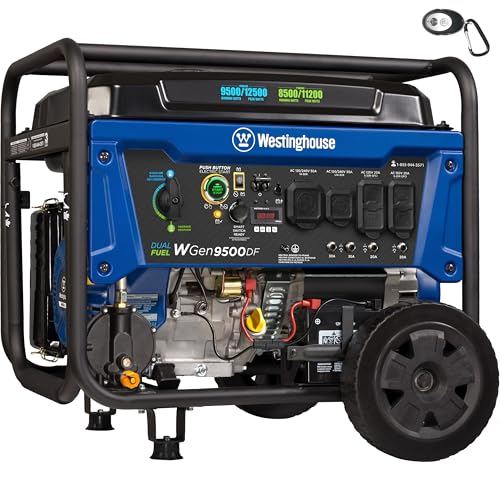 Westinghouse WGen9500DF Westinghouse WGen9500DF | runs on fuel | 9,500 W | fuel, not battery | — | $999 at Amazon |
| The battery route | 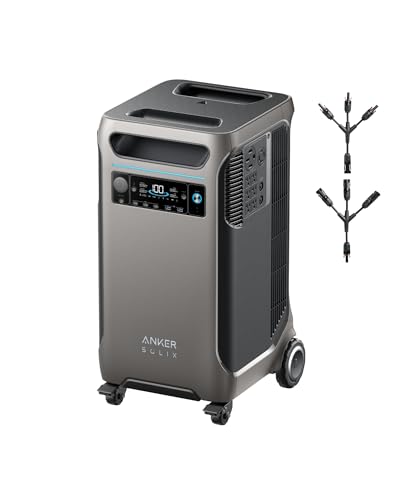 Anker SOLIX F3800 Anker SOLIX F3800 | 3,264 Wh | 6,000 W | +1 extra battery | $607 | $1,980 at Amazon |
Who this is for
You are on a well, so when the power goes the water goes with it: no tap, no shower, no second flush. You want the pump back, along with the fridge and a few lights, for about a day, and you have somewhere outdoors, well clear of the house, for a machine to sit and run.
How much battery you need
Two numbers come out of this plan; one decides everything. Keeping it all running takes 815 to 2,780 watts, which is the easy part. Starting the pump takes 2,115 to 6,780 watts for a split second, and a machine sized to the running total does not run the pump weakly, it stalls. A well pump is the hardest start in an ordinary house, and that surge is the number you shop on.
Adjust this plan to your house. Change the hours or the loads and the picks are re-scored here, with the same planner and the same maker figures.
Where the energy goes, load by load
| Load | Hours | Running watts | Duty cycle | Energy | Share of worst case |
|---|---|---|---|---|---|
| Refrigerator/freezer | 24 | 100–700 | 20–50% | 480–8,400 Wh | 52% |
| Well pump | 24 | 700–2,000 | 2–15% | 336–7,200 Wh | 45% |
| A few LED lights | 8 | 15–80 | 25–75% | 30–480 Wh | 3% |
Energy = running watts × duty cycle × hours, at each end of the range. The right-hand end of every row is what the plan is sized on.
A well pump, a refrigerator and a few LED lights for 24 hours, run against all 73 units we track: 12 clear at least the best case, 59 do not, and 2 could not be judged (a missing maker figure or an unresolved recall identity). Every figure is from the maker’s own page or manual; nothing here was tested by us. The method.
Our pickWestinghouse WGen9500DF
The one that starts it, at a price we can verify
$999 at Amazon, October 3, 20269,500 W continuous12,500 W peak211 lbgasoline, propane
The Westinghouse WGen9500DF clears the worst-case start with margin on Westinghouse's own peak rating, makes both 120 and 240 volts, and carries the twist-lock outlet that an inlet or transfer-switch cord plugs into. It runs on gasoline or propane, and it is the only pick on this page with a listing whose model number matches the maker's, which makes it the only one we can put a price against.
Our rule: the lowest Amazon price among the generators that clear this plan's running and starting watts and have 240 V output.
Price as of October 3, 2026; the listing we verified as the bare unit.
A well pump, a refrigerator and a few LED lights for 24 hours:
- Running loadyes, even in the worst case
- Starting surgeyes, even in the worst case
What you give up: Carbon monoxide, weight and noise.
Owner reports and tester figures are on the model page.
Figures from westinghouse.com, captured August 11, 2026; recall screen: no published recall names this exact model (screened 2026-10-01), but a similarly named product was recalled; the dossier names it (how we screen, CPSC).
The battery routeAnker SOLIX F3800
The battery route
$1,980 at Amazon, October 3, 20263,840 Wh (3,264 usable)6,000 W continuous9,000 W peak132 lb
The Anker SOLIX F3800 is here for the household that cannot run an engine: a covered lot, a rented place, an ordinance, or lungs that will not take exhaust. It makes split-phase 240 volts from a single box, its peak rating covers this plan's start, and it does the job silently and indoors.
Price as of October 3, 2026; the listing we verified as the bare unit.
A well pump, a refrigerator and a few LED lights for 24 hours:
- Energyonly in the best case
- Running loadyes, even in the worst case
- Starting surgeWell pump: starts it
What you give up: Energy, and the moving of it.
Owner reports and tester figures are on the model page.
Figures from ankersolix.com, captured August 12, 2026; recall screen: no published recall names this exact model (screened 2026-10-01) (how we screen, CPSC).
Day two and three
A generator has no runtime of its own; it runs as long as you feed it, so day two is a fuel question. Each maker quotes runtime on a full tank at a quarter of rated load, the figure on each card; this plan sits near that mark because the pump is idle most of the day. Count the refuels that implies across a 24-hour outage, and buy the cans before the storm.
Hooking it up safely
The pump is wired in, so there is no cord to move and no socket to use. Three things can reach it, and all of them are permit work. The safety rules and how we size the hookup.
Buying it right
A search for these models returns bundles, sibling models and the same unit under two prices. We link only a listing whose own title states the bare unit with its exact battery and output. Match the model number on the label to this page. How we check a listing.
- Westinghouse WGen9500DF: we link the bare unit, checked October 3, 2026. We turned down 9 other listings (bundles, sibling models, repeats); see which and why.
- Anker SOLIX F3800: we link the bare unit, checked October 3, 2026. We turned down 9 other listings (bundles, sibling models, repeats); see which and why.
What this page can’t promise
This page sizes machines against a modelled well pump, not against yours. Horsepower, depth and the control box set the surge, and the nameplate in your well house is the only place that number lives. If it sits above our range, everything here moves up a size.
Nothing here was tested by us. The figures are the makers' own, read off their pages and manuals and cited under each pick, and where a marketing page and its manual disagree we say so rather than take the better number. Owner reports come from public forum threads and review sites, labelled as such; some were readable only through search snippets.
The competition
Every unit we track, run against the same plan.
Every unit on Amazon that clears at least the best case (6)
| Model | Battery | Peak | Per usable kWh | Amazon price | Verdict |
|---|---|---|---|---|---|
| Westinghouse WGen9500DF | not listed by the maker | 12,500W | — | $999 | Clears it |
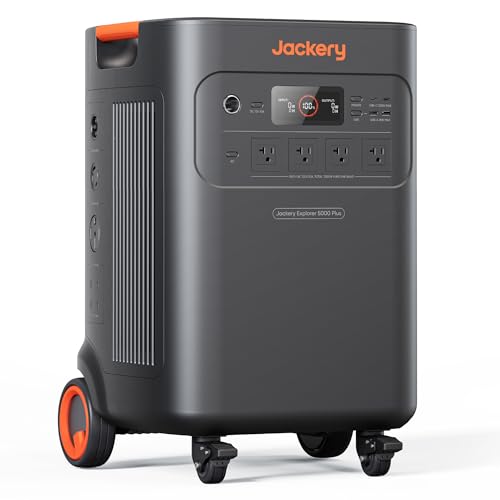 Jackery Explorer 5000 Plus Jackery Explorer 5000 Plus | 5,040Wh | 14,400W | $735 | $3,149 | Best case only |
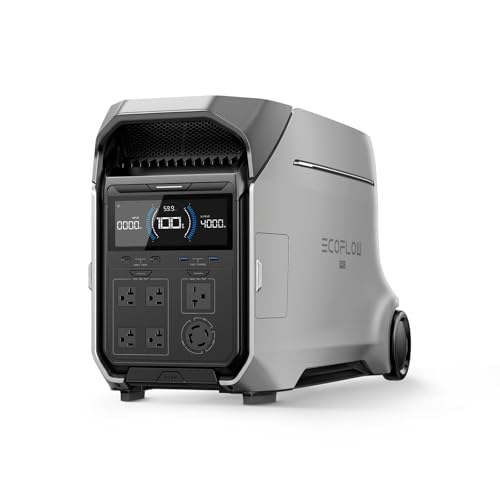 EcoFlow DELTA Pro 3 EcoFlow DELTA Pro 3 | 4,096Wh | 8,000W | $804 | $2,799 | Best case only |
| Anker SOLIX F3800 | 3,840Wh | 9,000W | $607 | $1,980 | Best case only |
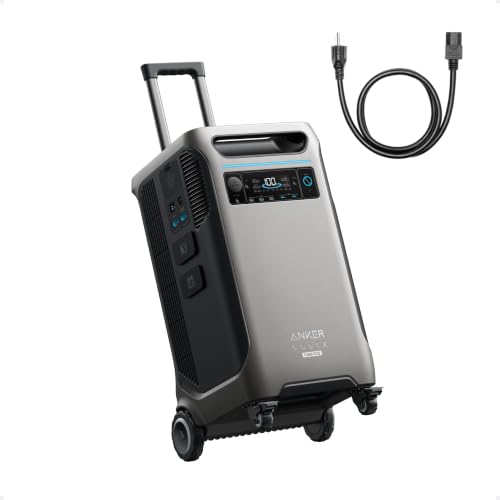 Anker SOLIX F3800 Plus Anker SOLIX F3800 Plus | 3,840Wh | 9,000W | $735 | $2,400 | Best case only |
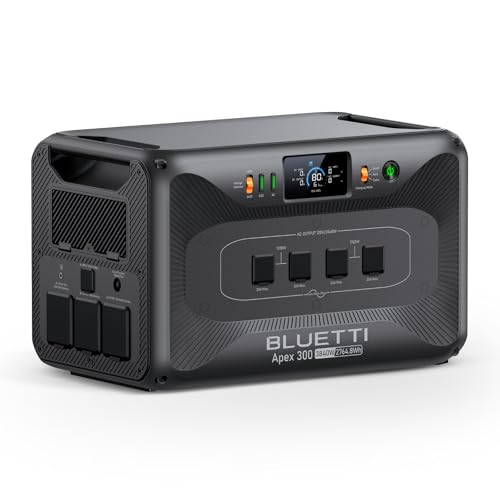 BLUETTI Apex 300 Home Battery Backup BLUETTI Apex 300 Home Battery Backup | 2,765Wh | 7,680W | $638 | $1,499 | Best case only |
6 more clear it but have no verified bare-unit Amazon listing; the planner lists them.
What will not work, and why (59)
- 59 lack the 240 V output the plan needs
Every one, with the figure that fails, is in the planner when you enter this plan.
Questions people ask
How many watts does it take to start a well pump?
In this plan, 2,115 to 6,780 watts for a split second, against 815 to 2,780 watts to keep everything running afterwards. Where your own pump falls in that span comes down to its horsepower and how deep it sits. The surge is what decides the purchase; the running watts are the easy part, and a machine that covers only those will stall the moment the pump kicks in.
Can a power station run a well pump, or do I need a generator?
A power station can, provided it makes split-phase 240 volts and its peak rating covers your pump's surge. The Anker SOLIX F3800 does both. The catch is the day rather than the start: it covers a 24-hour outage at the efficient end only, and with the grid down the refill is sunshine. A generator is fed rather than charged, which is why it usually wins this plan. Buy the battery if an engine is not an option where you are.
Can I just plug the generator into a socket in the house?
No. Pushing power backward through an outlet is backfeeding, it is illegal under the National Electrical Code, and Safe Electricity explains why: backfeed can energize power lines and injure people working nearby. It can also clash with returning utility power, start a fire, or wreck the generator. There is no version of this that is acceptable for one night.
Other plans we sized
- Home backup
- Camping and road trips
- CPAP
- Portable generators
- The home-backup class: DELTA Pro 3, SOLIX F3800, Explorer 5000 Plus and the rest (comparison)
- Refrigerator
- Sump pump
- Furnace
- Anker SOLIX F3800 vs F3800 Plus: the real differences (comparison)
- Power station or generator: which do you actually need?
- How to connect a power station to your house
- Solar panels for a power station: how many, and how long
- Expansion batteries: what an extra battery for a power station actually does
Westinghouse WGen9500DFOur pick
$999 at Amazon