DELTA Pro 3 vs Anker F3800 vs Jackery 5000 Plus
Buy the Anker SOLIX F3800 for most homes. It cost $1,980 on Amazon on October 3, 2026, $819 less than the DELTA Pro 3, and it takes up to six extra batteries. Buy the Jackery Explorer 5000 Plus if you want the biggest battery in one box. Buy the EcoFlow DELTA Pro 3 if you need the lightest of the three.
The Amazon links on this page are affiliate links: if you buy through one we may earn a commission, at no extra cost to you. It does not change which units are picked. How that works.
- Fridge, Wi-Fi and lights for a day. Lowest price.
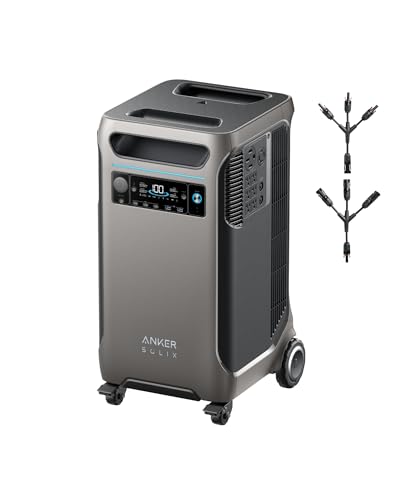 Anker SOLIX F3800$1,980 at Amazon
 - Add a gas furnace. Plus 2 BP3800 batteries: $5,580 in all. Anker SOLIX F3800$1,980 at Amazon
- One box, no add-ons. Biggest battery: 5,040 Wh.
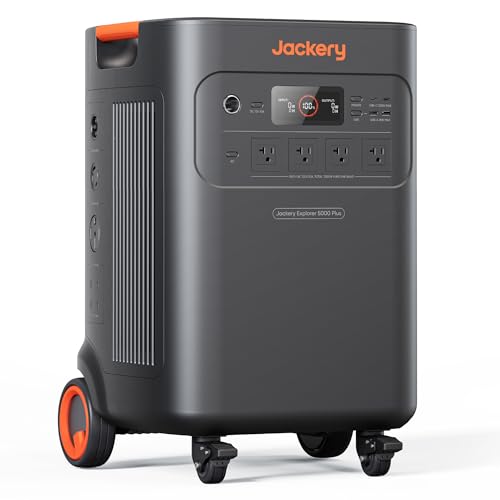 Jackery Explorer 5000 Plus$3,149 at Amazon
 - Lightest to move. 113.5 lb, against 134.5 lb.
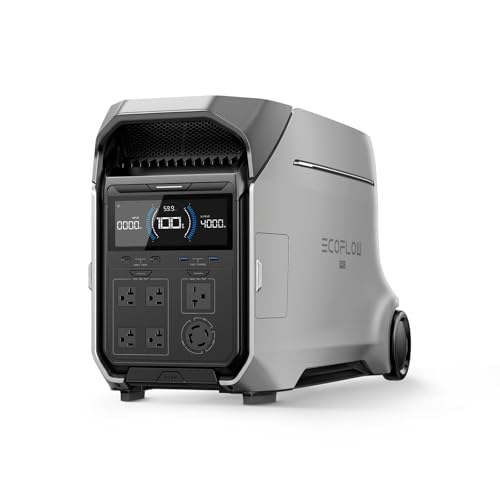 EcoFlow DELTA Pro 3$2,799 at Amazon
Prices checked October 3, 2026. Per usable kWh: F3800 $607, 5000 Plus $735, DELTA Pro 3 $804. We compile maker specs and published tests; we did not test these units.
What each house costs
The F3800 is the cheapest way in at every size. For a fridge, Wi-Fi and lights for a day, it covers it alone at $1,980. Add a gas furnace and it needs 2 extra batteries: $5,580 in all, against $6,397 for the DELTA Pro 3 with 2. For three days, only the F3800 with 6 batteries holds enough ($12,780). The DELTA Pro 3 stops at two batteries.
The same numbers as a table
| Job | DELTA Pro 3 | F3800 | 5000 Plus |
|---|---|---|---|
| Fridge, Wi-Fi, lights: 1 day | $2,799 | $1,980 | $3,149 |
| Add a gas furnace: 1 day | $6,397 (+2) | $5,580 (+2) | too small |
| Fridge and furnace: 3 days | too small | $12,780 (+6) | too small |
(+2) = with two extra batteries.
Each bar is the cheapest setup that lasts the job: the bare station plus the fewest of the maker’s own extra batteries, at Amazon prices (October 3, 2026). A fridge and furnace with Wi-Fi, lights and phones use about 7,478 Wh a day. Our home-backup guide uses the same rule and picks the same F3800 setup. Jackery sells its Battery Pack 5000 Plus, but not alone on Amazon, so the 5000 Plus stops at one box here. One box of it runs the fridge and furnace about 14 hours.
What differs, side by side
All three are LiFePO4 batteries on wheels with 120 V and 240 V outlets, and each takes its own maker’s extra batteries. These are the differences that decide which one fits your house.
| DELTA Pro 3 | F3800 | 5000 Plus |
|---|---|---|
| Amazon price, October 3, 2026 | ||
| $2,799 | $1,980 | $3,149 |
| Per usable kWh | ||
| $804 | $607 | $735 |
| Battery | ||
| 4,096 Wh; 3,482 usable | 3,840 Wh; 3,264 usable | 5,040 Wh; 4,284 usable |
| Fridge, furnace, Wi-Fi, lights and phones on one charge | ||
| about 11 hours | about 10 hours | about 14 hours |
| Output | ||
| 4,000 W; 6,000 W for heaters with X-Boost1 | 6,000 W2 | 7,200 W |
| 240 V | ||
| 120 V or 240 V, not both at once1 | 14-50 and L14-30 outlets, 120/240 V2 | 14-50 and L14-30 outlets, 120/240 V3 |
| Extra batteries | ||
| Up to 2, 4,096 Wh each: 12,288 Wh4; $1,799 each on Amazon | Up to 6, 3,840 Wh each: 26,880 Wh5; $1,800 each on Amazon | Up to 5, 5,040 Wh each: 30,240 Wh3; not sold alone on Amazon |
| Solar | ||
| 2,600 W: 1,600 W at 30–150 V plus 1,000 W at 11–60 V4 | 2,400 W: two inputs of 1,200 W, 11–60 V2 | 4,000 W, from 135–450 V strings only; 1,200 W from ordinary 16–60 V panels6 |
| Wall charging | ||
| 1,800 W; about 3 hours in a test7 | 1,800 W5 | 1,750 W; about 3.5 hours6 |
| Switch to battery (UPS) | ||
| 10 ms4 | 20 ms, on 3 of the 120 V outlets5 | 0 ms on 2 outlets in Online UPS mode; under 20 ms otherwise63 |
| Weight | ||
| 113.5 lb4 | 132.3 lb2 | 134.5 lb3 |
| Warranty | ||
| 3 years, or 5 if you register it in the EcoFlow app1 | 5 years2 | 5 years3 |
Maker specs, read October 1, 2026. Per usable kWh = Amazon price ÷ 85% of the battery. Extra-battery prices checked October 3, 2026. Hours use our typical draws: about 312 W for the fridge, furnace blower, Wi-Fi, lights and phones together.
Which one for your house
Anker SOLIX F3800: most homes
It costs the least per usable kWh ($607) and grows the furthest, to 26,880 Wh with six BP3800 batteries8. It gives 6,000 W at 120 V and 240 V. The catches: it weighs 132.3 lb, its solar inputs take only 11–60 V, and only three outlets switch over as a UPS. Full F3800 page.
Jackery Explorer 5000 Plus: the biggest single box
It holds 5,040 Wh and gives 7,200 W, the most of the three. On one charge it runs a fridge and furnace about 14 hours, the only one of the three that lasts 12 hours. Its 4,000 W solar input needs high-voltage panel strings6. Left on, it uses about 50 W by itself6. Full 5000 Plus page.
EcoFlow DELTA Pro 3: the lightest
At 113.5 lb it is about 21 lb lighter than the 5000 Plus. It switches to battery in 10 ms4, faster than the F3800’s 20 ms. It gives 4,000 W, the least here, and 120 V or 240 V, not both at once. It costs the most per usable kWh ($804). Full DELTA Pro 3 page.
What testers found
We do not test units ourselves. These testers did.
- DELTA Pro 3. OutdoorGearLab got 3,790 Wh out of the 4,096 Wh battery9. The Solar Lab filled it from a 120 V outlet in about 2 hours 54 minutes7. Robb Sutton’s 3-ton central air, with a soft-start kit, tripped its overload10. Bob Vila’s tester needed two people to load it into a truck11.
- F3800. The Solar Lab got only about 1,600 W of solar into it12. Its fans run at 50–60 dB when they come on13. TechRadar’s Collin Probst found it hard to move between floors14. He uses two F3800s, 12 kW, for his air conditioning15.
- 5000 Plus. The Solar Lab ran 8,000 W and 9,500 W loads for 20–30 seconds16, but it struggled to start an air conditioner with a 10,000 W surge16. They measured about 58 W used at idle16. GearDiary kept a well pump running on it through Jackery’s switch17.
Questions buyers ask
Can any of these run a whole house?
Not on their own. Each one feeds the circuits you choose through a panel that an electrician installs. EcoFlow Smart Home Panel 2: up to three DELTA Pro 3s and 12 circuits1 ($1,599 at Amazon). Anker Home Power Panel5 ($1,099 at Amazon). Jackery Smart Transfer Switch: 12 circuits at 120 V or 6 at 240 V18 ($999 at Amazon). An inlet box and a transfer switch also work with all three. Panel prices checked October 3, 2026. All ways to connect.
Which one recharges fastest in an outage?
From the wall they are close: 1,800 W, 1,800 W and 1,750 W. From solar, the 5000 Plus takes the most, 4,000 W, but only from high-voltage strings. With ordinary panels it takes 1,200 W, less than the DELTA Pro 3 (2,600 W) or the F3800 (2,400 W). Which panels fit.
Can I mix extra batteries between brands?
No. Each takes only its own maker’s packs. The F3800 takes the Anker BP3800, which also fits the F3800 Plus8. The DELTA Pro 3 takes its own Smart Extra Battery or the older DELTA Pro one1. The 5000 Plus takes Jackery’s Battery Pack 5000 Plus. Per usable kWh on Amazon (October 3, 2026): EcoFlow’s pack $517, the BP3800 $551. All extra batteries.
What about the Anker F3800 Plus?
Same battery, output and BP3800 packs as the F3800. It adds 3,200 W of solar at 11–165 V19 and charging from a 240 V generator19. It weighs 136.7 lb19. It cost $2,400 on October 3, 2026, $420 more than the F3800. F3800 or F3800 Plus.
Can it charge an electric car?
The F3800 can, in EV mode from its 14-50 outlet2. One full charge adds only 3.84 kWh: a short top-up, not a fill.
Which one is quietest?
Jackery says the 5000 Plus fan runs at 30 dB or less6. The Solar Lab found it very quiet under heavy load16. EcoFlow claims 30 dB for the DELTA Pro 3, with a whine at higher loads20. The F3800 fans run at 50–60 dB when on13.
How much power do they use sitting idle?
Jackery lists 50 W for the 5000 Plus6, about 1.2 kWh a day. The Solar Lab measured about 58 W16. EcoFlow and Anker do not publish this figure. Turn off the outputs you are not using.
Have any of these been recalled?
No CPSC recall names any of the three in our latest screens (September 29, 2026 to October 1, 2026). That cannot clear your own unit. Check the model and serial number on the label with the maker or the CPSC recall search.
Sources
Specs are the makers’ own. Test results are credited to each tester.
All 20 sources, with the date we read each
- EcoFlow DELTA Pro 3 product page.
- Anker SOLIX F3800 page.
- Jackery Explorer 5000 Plus user manual (PDF).
- EcoFlow DELTA Pro 3 user manual (PDF).
- Anker SOLIX F3800 user guide, US (PDF).
- Jackery help center: Explorer 5000 Plus basic information.
- The Solar Lab: DELTA Pro 3 review.
- Anker SOLIX BP3800 Expansion Battery page.
- OutdoorGearLab: DELTA Pro 3 review.
- Robb Sutton: DELTA Pro 3 review.
- Bob Vila: EcoFlow DELTA Pro 3 review.
- The Solar Lab: Anker SOLIX F3800 Plus review.
- The Solar Lab: Anker SOLIX F3800 review.
- TechRadar: Anker Solix F3800 review (Collin Probst).
- TechRadar: F3800 Home Power System review (Collin Probst).
- The Solar Lab: Explorer 5000 Plus review.
- GearDiary: Explorer 5000 Plus and Smart Transfer Switch review.
- Jackery Smart Transfer Switch page.
- Anker SOLIX F3800 Plus page.
- EcoFlow DELTA Pro 3 FAQ.
More: EcoFlow DELTA Pro 3 · Anker SOLIX F3800 · Jackery Explorer 5000 Plus · Best power station for home backup · F3800 vs F3800 Plus · Which transfer switch fits.